
Beyond the Hype: What Today’s AI Body Generators Really Offer Adult Content Users
Let’s cut through the noise.
For years, headlines about “AI undressing” tools have swung between panic and parody. One minute, it’s a dystopian threat to privacy; the next, it’s a punchline in a late-night comedy sketch. But if you’ve actually spent time in adult content communities—whether as a creator, consumer, or developer—you know the reality is far more mundane, and far more interesting.
People aren’t using these tools to stalk strangers or fabricate revenge porn (at least, not in the volumes fear-mongers suggest). Instead, they’re experimenting, customizing, and even streamlining their creative workflows in ways that feel surprisingly… normal.
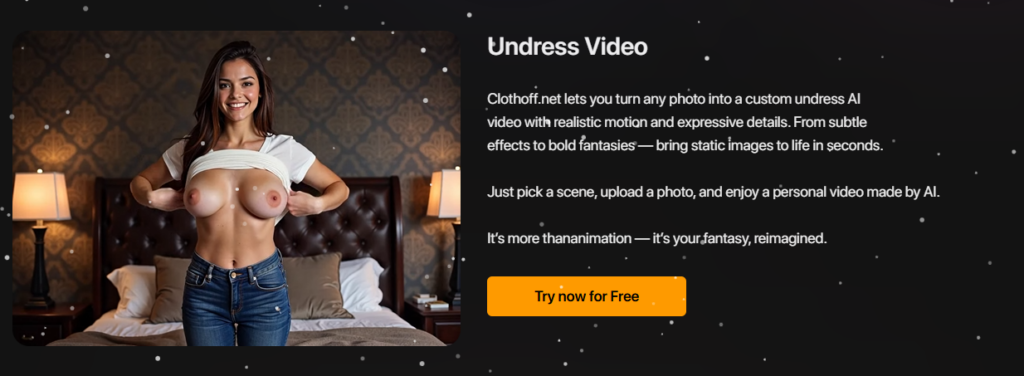
At the heart of this shift is a quiet evolution in artificial intelligence—specifically, models trained to understand human anatomy, lighting, fabric physics, and pose dynamics well enough to generate plausible visual reconstructions from a single clothed photo. These aren’t magic. They’re math. But in the right hands, they become something useful.
And while early attempts were clunky, racially biased, and limited to front-facing shots of women, today’s versions have matured. They’re faster, more inclusive, and increasingly accessible through simple web interfaces. No coding. No GPU. Just a browser.
Among the many names floating around forums and search bars—some legit, many not—one term keeps resurfacing not as a brand, but as a category: deepnude ai. It’s become shorthand for a whole class of tools that promise one thing: visual transformation without physical exposure.
But what do these tools actually deliver? And who benefits from them?
The Real Use Cases (Hint: It’s Not What You Think)
Forget the worst-case scenarios for a moment. Let’s talk about how these tools are actually being used in 2026.
1. Content creators looking for flexibility
Many independent models—especially those just starting out—hesitate to shoot fully nude due to stigma, platform restrictions, or personal boundaries. With an AI-assisted generator, they can take a photo in lingerie or swimwear and produce a range of “nude-adjacent” previews for teasers, pay-per-view galleries, or subscriber polls. It’s not a replacement for real content, but a way to test audience interest before committing to a full shoot.
2. Personal fantasy, private use
Couples sometimes use these tools as part of digital intimacy—uploading photos of each other (with consent) to explore “what if” scenarios. Think of it like a high-tech version of fantasy roleplay, where the visuals are generated on demand. As long as both parties are enthusiastic and informed, it falls into the same ethical space as erotic audio or written fiction.
3. Archive revival and retro aesthetics
Vintage adult photography—especially from the 70s to 90s—often features models in sheer fabrics, partial coverage, or artistic draping. Some collectors and digital artists use AI tools to “restore” or reinterpret these images in a more explicit form, not to deceive, but to explore alternate presentations of classic visuals. Since many of these photos are in the public domain or used under fair use, the legal risk is low.
4. Tech tinkerers and privacy advocates
Surprisingly, some of the most vocal users are privacy researchers. They use these tools to test how easily biometric data can be inferred from publicly available photos—and then develop countermeasures like adversarial noise filters (e.g., Fawkes) to protect against unwanted reconstruction.
In short: the user base is diverse, nuanced, and rarely malicious. The real issue isn’t the tool—it’s the lack of consent in any digital manipulation. That’s a human problem, not a technological one.
How the Tech Actually Works (And Why It’s Better Now)
Early AI body generators relied on Generative Adversarial Networks (GANs)—a setup where two neural networks battle it out to create increasingly realistic fakes. But GANs had limits: they struggled with diversity, required massive datasets, and often produced distorted limbs or impossible anatomy.
Today’s leading models use diffusion architecture, the same backbone behind tools like MidJourney and DALL·E 3. Instead of “guessing” the final image in one go, diffusion models start with pure noise and gradually refine it over hundreds of steps, guided by the input photo’s pose, lighting, and proportions.
This means:
- Better handling of diverse body types, skin tones, and poses,
- More realistic shadow and contour rendering,
- Improved fabric-to-skin transitions (no more floating limbs or melted torsos),
- And the ability to work with partial views—like side profiles or arms crossed.
Some newer platforms even let users tweak parameters: adjust body shape, skin tone, or lighting intensity before generating the final image. It’s not perfect, but it’s light-years ahead of the janky outputs of 2019.
The Anatomy of a Reliable Service
Not all platforms are created equal. In fact, most are either scams, data harvesters, or poorly coded demos that crash on upload.
Here’s what to look for in a trustworthy service:
✅ Zero registration required – Real tools work instantly. If you’re asked to “sign up to unlock,” it’s a red flag.
✅ Automatic image deletion – Legit platforms state clearly that photos are purged from servers within 5–10 minutes.
✅ No hidden crypto miners or pop-ups – If your browser lags or ads flood the screen, leave immediately.
✅ Transparent output limits – Free tiers often cap resolution (e.g., 512x512px). That’s normal. Upscaling usually requires a small fee.
✅ No fake “realism” claims – Anyone promising “photos indistinguishable from real nudes” is lying. Good services admit their outputs are simulations, not replicas.
Also, avoid anything hosted on obscure TLDs like .xyz or .top unless it’s well-reviewed on trusted forums (e.g., specific NSFW Reddit communities or creator Discord servers).
The Consent Conundrum
This is where things get thorny—and where adult users need to be most careful.
Key rule: If the person in the photo didn’t give you permission to alter their likeness in this way, don’t do it. Full stop.
Even if the image is “public,” that doesn’t equal consent for intimate reinterpretation. This applies to celebrities, ex-partners, classmates, or random social media profiles. The ethical line is crystal clear: consent isn’t optional.
Thankfully, many modern platforms now include built-in safeguards:
- Some blur or reject uploads of faces they recognize as belonging to minors (via AI detection),
- Others block images containing logos, watermarks, or known public figures,
- A few even require a checkbox confirming “I own this image or have permission to modify it.”
These aren’t foolproof, but they show the industry is maturing beyond the Wild West phase.
Legal Realities: What’s Allowed, Where?
Jurisdictions vary wildly:
- United States: Federal law doesn’t explicitly ban AI-generated intimate imagery—but 13 states now include “synthetic media” in their non-consensual pornography laws. California’s AB 602, for example, makes it illegal to distribute AI-generated explicit images of someone without consent, even if no real photo was used.
- European Union: The upcoming AI Act classifies body reconstruction models as “high-risk” if used without consent. GDPR also treats inferred biometric data as sensitive—meaning platforms could be liable for processing it unlawfully.
- Elsewhere: In many countries, there’s no specific law—but civil lawsuits for emotional distress or defamation can still apply.
That said, enforcement is nearly impossible when services are hosted in privacy-friendly jurisdictions (think Estonia, Seychelles, or decentralized IPFS networks). So the onus falls on users to act ethically.
Safety Tips for First-Time Users
If you’re curious, protect yourself:
- Use your own photos — or public domain images with clear usage rights.
- Browse in incognito mode — prevents tracking and accidental history saves.
- Never pay with real identity — if a subscription is needed, use a burner email and prepaid card (or privacy-focused crypto like Monero, if accepted).
- Don’t share outputs publicly — even if you generated them from your own photo, AI content can be misused or misattributed.
- Assume everything is logged — even if the site claims deletion, operate as if your upload could resurface.
Remember: the goal isn’t secrecy—it’s responsible experimentation.
The Future: Integration, Not Isolation
These tools won’t stay in the shadows. Expect to see them:
- Built into content creation suites (like adult versions of Canva or CapCut),
- Offered as premium features on subscription platforms (e.g., “AI alternate angles” for fan sites),
- Paired with VR/AR experiences for immersive previews,
- And eventually regulated with visible watermarks (e.g., “AI-Generated” tags in metadata).
But the biggest shift? Normalization. Just as photo filters went from “cheating” to standard practice, AI-assisted body rendering may soon be just another option in the digital intimacy toolkit—for those who choose to use it.
Final Word
The phrase deepnude ai might carry baggage, but the technology behind it is neutral. Like a camera, a paintbrush, or a vibrator, its impact depends entirely on who’s using it—and why.
The adult space has always been a pioneer in digital innovation. From early webcam shows to blockchain-based fan tokens, it adapts fast. This is just the next chapter.
The question isn’t “Should this exist?”
It’s “How do we use it with integrity?”
And that’s a conversation worth having—with eyes open, and ethics intact.