
Only 4.2% of OnlyFans Subscribers Ever Pay. Finding the Right Ones Is the Whole Game.
Every guide to “getting subscribers” chases volume. The data says volume is the wrong target — the job is finding, and converting, the small minority who actually spend.
Sign up ten thousand subscribers on OnlyFans and, on average, about 420 of them will ever spend a dollar. The other 9,580 will look and leave.
That ratio — only 4.2% of subscribers pay anything, at an average of $48.52 each — comes from an OnlyGuider study of more than a million subscribers, reported by The Globe and Mail, and it quietly demolishes most of the advice creators are handed. “Post more, promote harder, get more subscribers” optimizes for the wrong number. Subscriber count is a vanity metric. The actual game in 2026 is finding the sliver of people who convert — and it is played almost entirely off the platform.
The number that changes the strategy
Start with what 4.2% means in practice. It means 95.8% of the people who subscribe never pay a cent. A creator with 1,000 free subscribers and a creator with 150 high-intent ones can end the month with the same deposit. Volume flatters the dashboard; conversion pays the rent.
This is why chasing raw subscriber numbers is a trap — pouring water into a leaky bucket and wondering why it never fills. The creators who earn aren’t necessarily the ones with the biggest audiences. They’re the ones whose audiences are made of the right people: viewers who arrived already wanting what’s on offer, rather than curious scrollers who followed a free link and forgot about it by morning.
Why finding subscribers happens off-platform
Here’s the structural reason acquisition is so hard. OnlyFans has no discovery — no explore page, no algorithmic feed, no working search — and more than four million creators competing for attention. A creator effectively cannot be found on the platform itself. Every single subscriber has to be imported from somewhere else.
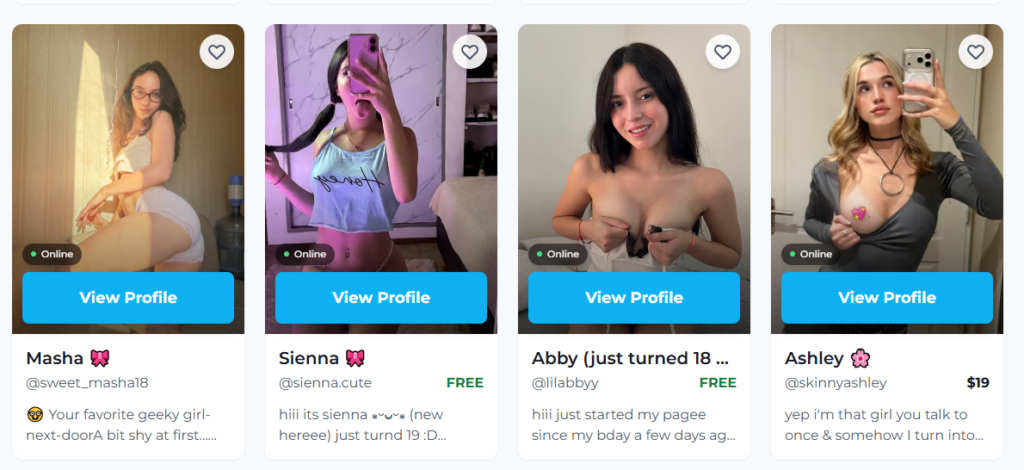
That turns “finding subscribers” into a traffic problem, and traffic sources are not equal. Cold audiences from mainstream feeds convert poorly; high-intent audiences — people already searching out a specific niche — convert far better, which is the entire point of finding the right subscribers rather than simply more of them. It’s also why the off-platform discovery layer matters so much. Creators get surfaced through third-party tools that function as an index of active creators, sorting them by niche so an audience that’s already looking can actually land on the right profile. On a platform that refuses to help people find anyone, being listed where the buyers search is not optional. It’s the storefront.
It’s harder in 2026
The traffic problem got more complicated this year. In June 2025 the Supreme Court upheld state age-verification laws for adult sites, CNN reported, and the resulting patchwork of ID walls and VPN detours now sits between fans and content across a growing list of states. For creators, that means the off-platform channels they depend on to find subscribers are narrower and more fractured than they were a year ago — just as the field hits four million and competition peaks. Acquisition was never easy. In 2026 it’s an obstacle course.
Finding isn’t the finish line
Even a perfectly targeted subscriber is only the start. Once someone is through the door, messages drive 69.74% of all creator revenue, again per the OnlyGuider study — meaning the money is made in the inbox, not on the feed.
So the full funnel is three stages, not one: find high-intent traffic, convert it into the paying 4.2%, and retain it through direct messaging and pay-per-view. Skip any stage and the others are wasted — a flood of free subscribers who never convert, or a handful of paying fans who churn out because no one kept the conversation going. Acquisition gets the attention in the how-to guides. Conversion and retention are where the earnings actually live.
The caveats
Read the figures for what they are. OnlyGuider’s numbers are estimates modelled from search and financial data, not a transaction ledger. The 4.2% is a platform-wide average — the top tier converts considerably better, and the long tail considerably worse, so no single creator should expect exactly that rate. “Find the right subscribers” is also far easier to write than to execute; every off-platform channel has its own rules, gatekeepers and volatility. This is a structural reframe of the problem, not a shortcut around it.
What the data settles is the priority. The number to grow isn’t subscribers. It’s paying, retained ones.